Deconstructing Patterns
In 2018, I curated the Crick’s first art/science exhibition, which delved into a myriad of intriguing cellular and molecular forms through three artist commissions, developed in close collaboration with Crick researchers.
Deconstructing Patterns: Art and Science in Conversation provided a glimpse into three intricate developmental patterns studied at the Crick, each one introduced by a unique artwork. The exhibition considered the act of deconstruction as a creative process. By taking patterns apart, both artists and scientists sought new insights into the puzzle of how the complexity of the human body arises.
In curating the show, I paired each creative partner with a different group of scientists and provided hands-on opportunities for them to explore the form and function of specific cellular and molecular patterns studied by their partner labs. Each artist was given the brief to develop work to support the visitor journey into the minute world of biological patterns. As all scientists at the Crick study patterns in some form, or use pattern-searching as a tool, this theme enabled the Crick to present a cross-section of its research and offer a glimpse into some of the big questions scientists are pursuing.
The resulting artworks offered an alternative way of exploring and describing microscopic biomedical patterns. They took the form of a poetry and soundscape piece by award-winning poet Sarah Howe and sound artist Chu-Li Shewring, a sculpture and film by Australian visual artist Helen Pynor and a film created by a local group of young filmmakers, KaleiKo.
Read on about each commission:
Infinite instructions
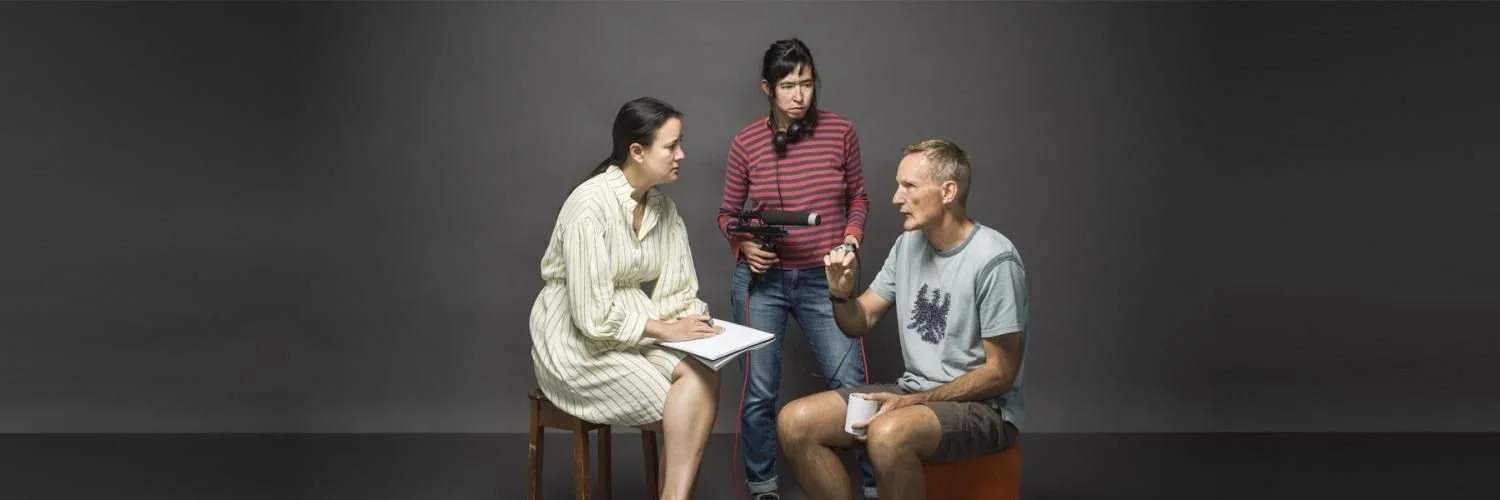
Dr Greg Elgar with artists Chu-Li Shewring and Sarah Howe
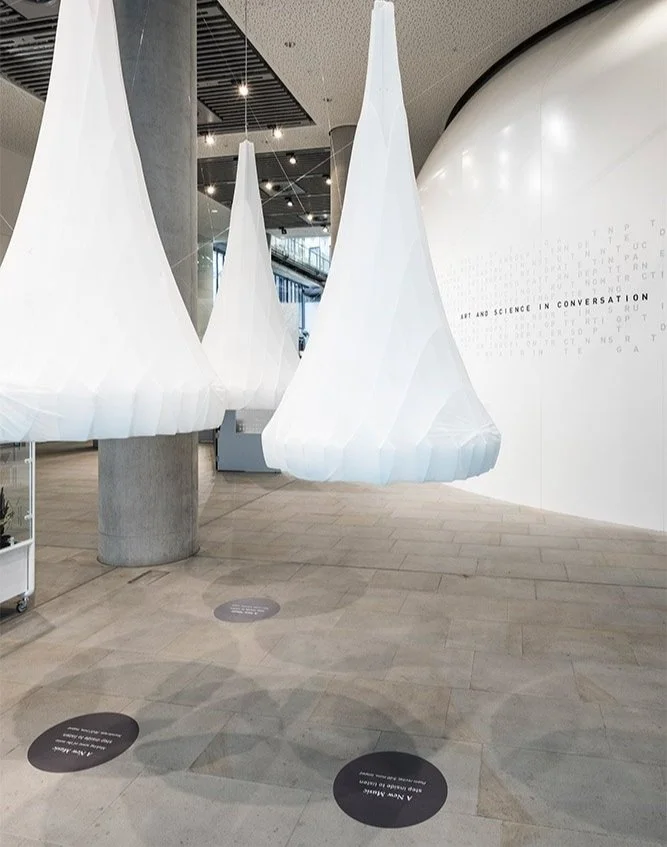
Image credit Stephen Pocock
The human genome is a vast and complex set of instructions, which – with the exception of identical twins – is entirely unique to each of us. It comprises three billion pieces of information, represented by four letters A, T, C and G. This deceptively simple string of letters holds potential answers to many of our biggest questions about human health and disease. For Crick scientists, searching for patterns is one way to tackle the challenge of translating the genetic code into something understandable.
In partnership with Poet in the City, the Crick hosted sound artist Chu-Li Shewring in residence with award-winning poet Sarah Howe within the Advanced Sequencing facility. During their time working with scientists, Sarah and Chu-Li became particularly intrigued by the human endeavour of searching for meaning within gigantic sequencing datasets, like hunting for a needle in a haystack.
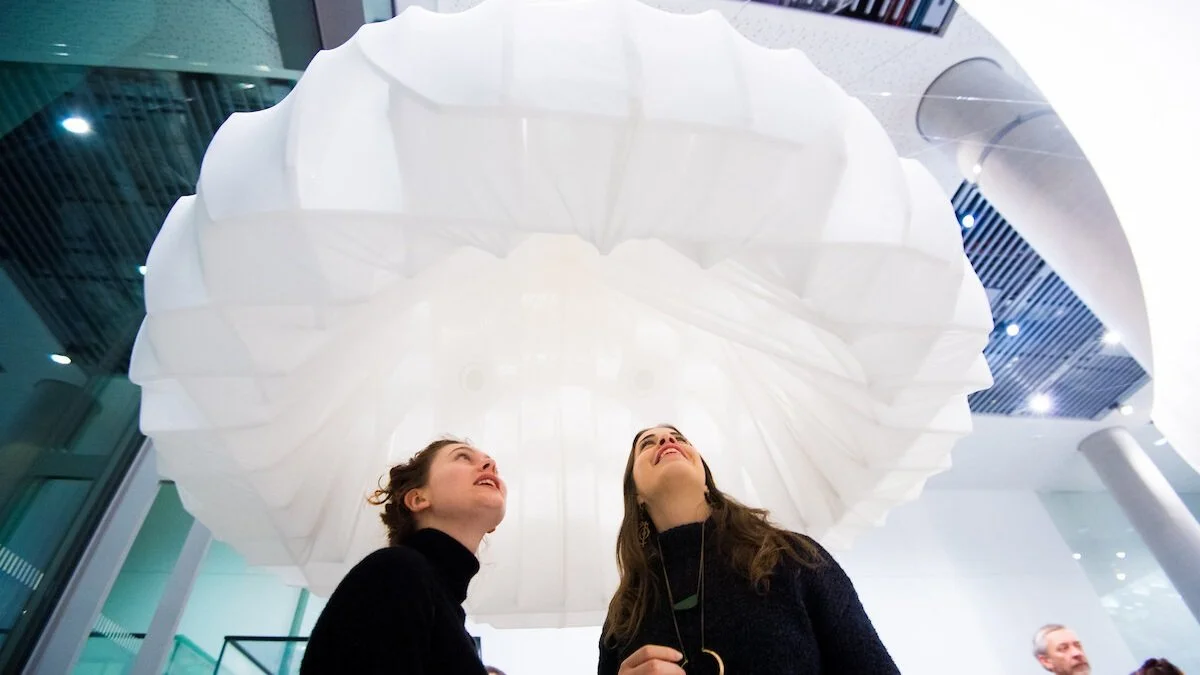
Their resulting artworks, ‘A New Music’ and ‘Making Sense of the Noise’ delve into the form, function and rhythm of the genome, highlighting the beauty and wonder of the natural world, whilst exploring the concept of the unknown as a source of inspiration. I worked closely with the exhibition design team, Studio Prelude, to develop suspended soundscape pods within which visitors stepped, offering a curious immersion into the challenges faced by both artist and scientist to find new ways to articulate the abstract with clarity and meaning.
Listen to the head of Advanced Sequencing and the artists reflecting on the residency:
“The commissions jointly address the idea of the search for patterns, and the streaks of light which emerge from the darkness as solutions, identities and experiences become clear – this relates to both the act of scientific discovery as patterns are discovered in genome sequencing and scientists finding their voice within the vastness of DNA research, and the experiences of the artists in terms of how sounds stand out within the hum of everyday experience and as Sarah notes, the ‘elegance of form’ and how this emerges as distinct.”
Transforming connections
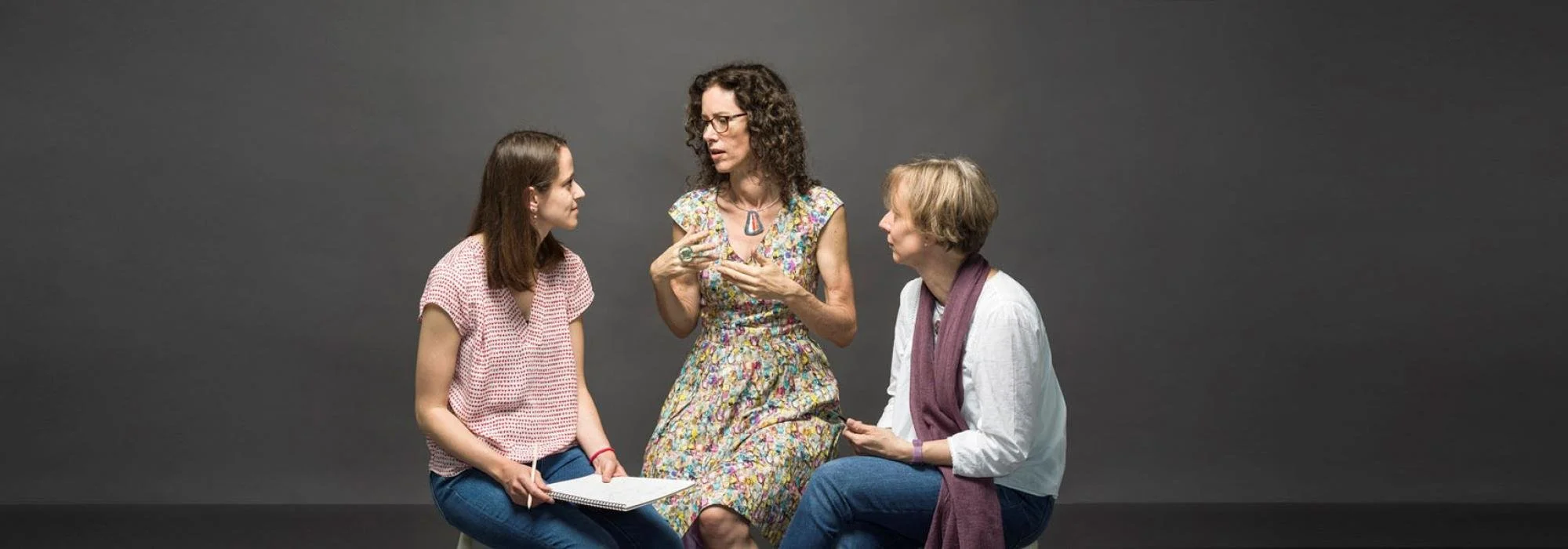
Dr Iris Salecker and PhD Emma Powell with artist Helen Pynor
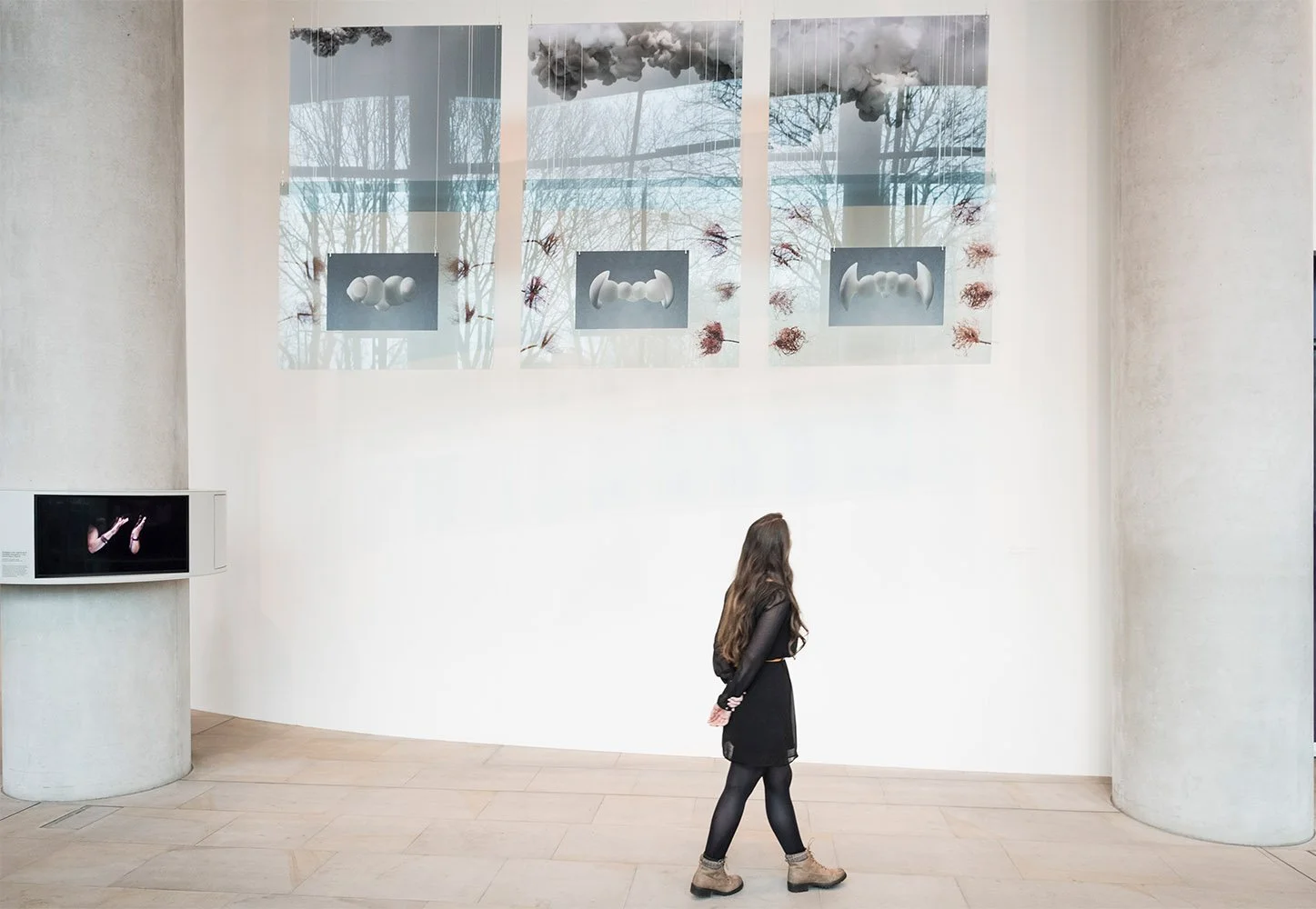
Image credit Stephen Pocock
Helen Pynor was commissioned to undertake an extended residency in the laboratory of scientist Dr Iris Salecker, who study the fruit fly Drosophila melanogaster, which goes through an extraordinary metamorphosis as it develops. Upon hatching, the fly has a pair of almost crystalline compound eyes, through which visual information is transmitted to the central brain. This area of the brain contains a multitude of nerve cells (or neurons), whose extensions are arranged in a beautifully regular pattern of columns and layers. The scientists are investigating how neural networks develop to form connections within the optic lobe. They hope that understanding how these fundamental steps are coordinated within a growing brain may provide insights into how disorders such as autism, epilepsy and schizophrenia arise in humans.
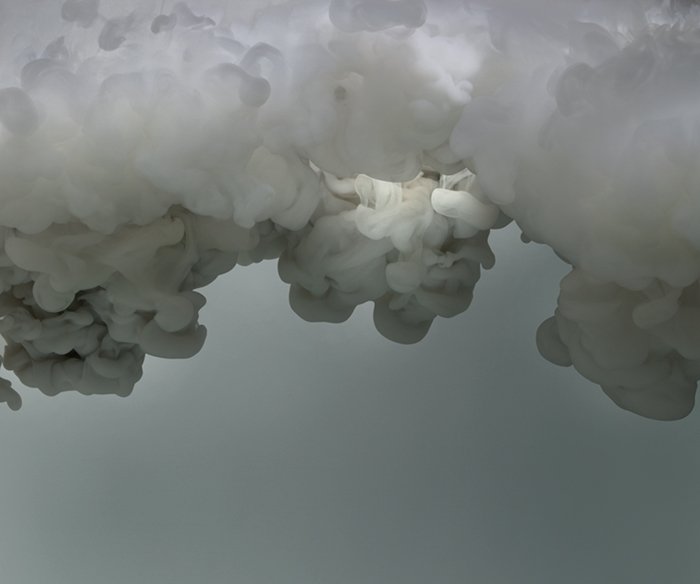
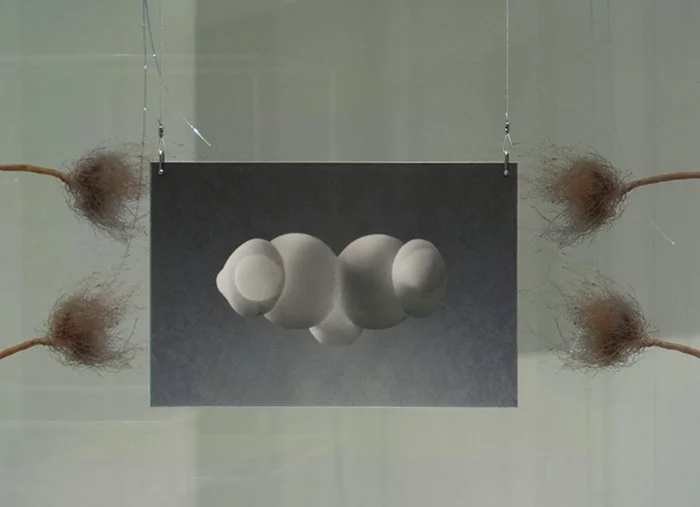
Helen not only became captivated by the transformations being studied by the lab but also the limitations of language and imagery in articulating these phenomena. Working closely with Iris, she created tactile wax models to support her spatial understanding of the changes that occur during metamorphosis. She combined photographs of these models with acrylic, lights and imagery drawn from nature to create her final piece, which is suspended from the ceiling of the Gallery. Helen also worked with Iris to create a film that captures the physical gestures relied upon by the scientist when describing complex and intricate developmental processes (you can watch a section of this below).
The resulting commission is an investigation into the expansion and movement of patterns in time. Helen invited Iris Salecker and PhD Emma Powell to visit her studio whilst she developed the final artwork. Listen to their response and reflections on the collaboration in this recording by Ellie Mackay:
“Development of the visual circuit in Drosophila melanogaster is a sculptural symphony unfolding in three acts, performed with minor variations, over and over in these tiny bodies. Tissue furls, unfurls and furls again, each time assuming a new form that eventually leads to the unlikely miracle of sight.”
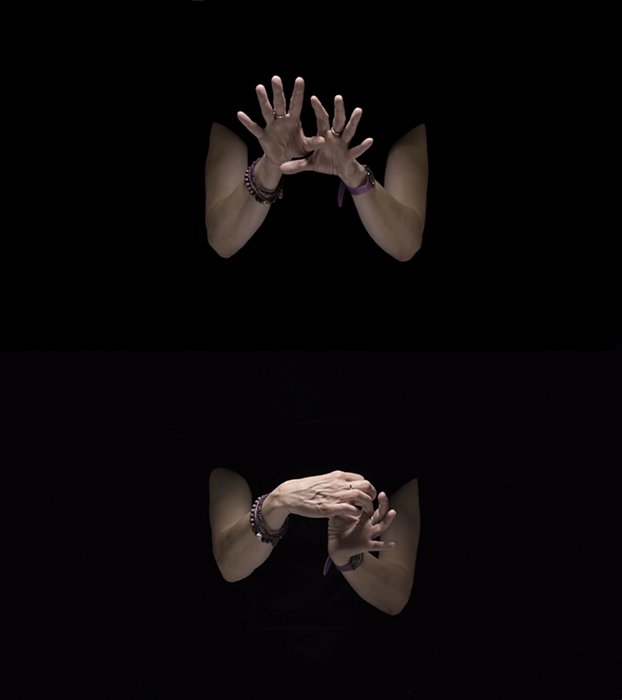
This video was recorded over a 22-minute period as Salecker described in detail the complex series of events that take place during the development of brain circuits responsible for vision in the fruit fly Drosophila melanogaster. In this highly spatial scientific story Pynor is interested in the precision and articulate nature of Salecker’s gesture, her body filling in some of the gaps, literally and metaphorically, between language and meaning.
The work falls within a broader interest of Pynor’s in the embodied, situated, performative and subjective nature of scientific practice. Scientific practice does not take place in a rarified, abstracted space where scientists have a disinterested distance from their subject. Rather, the feeling scientists have for their subject, the extended range of languages they use to articulate their work, and the centrality of their own bodies in dialogue with the bodies they study, are all layered into scientific research in spoken and unspoken ways.
Artist: Helen Pynor
Performer: Iris Salecker
Curation: Bryony Benge-Abbott
Videography: Ben Gilbert, Wellcome
Video Post-Production: John A Douglas
© Helen Pynor, 2018
Breaking symmetry
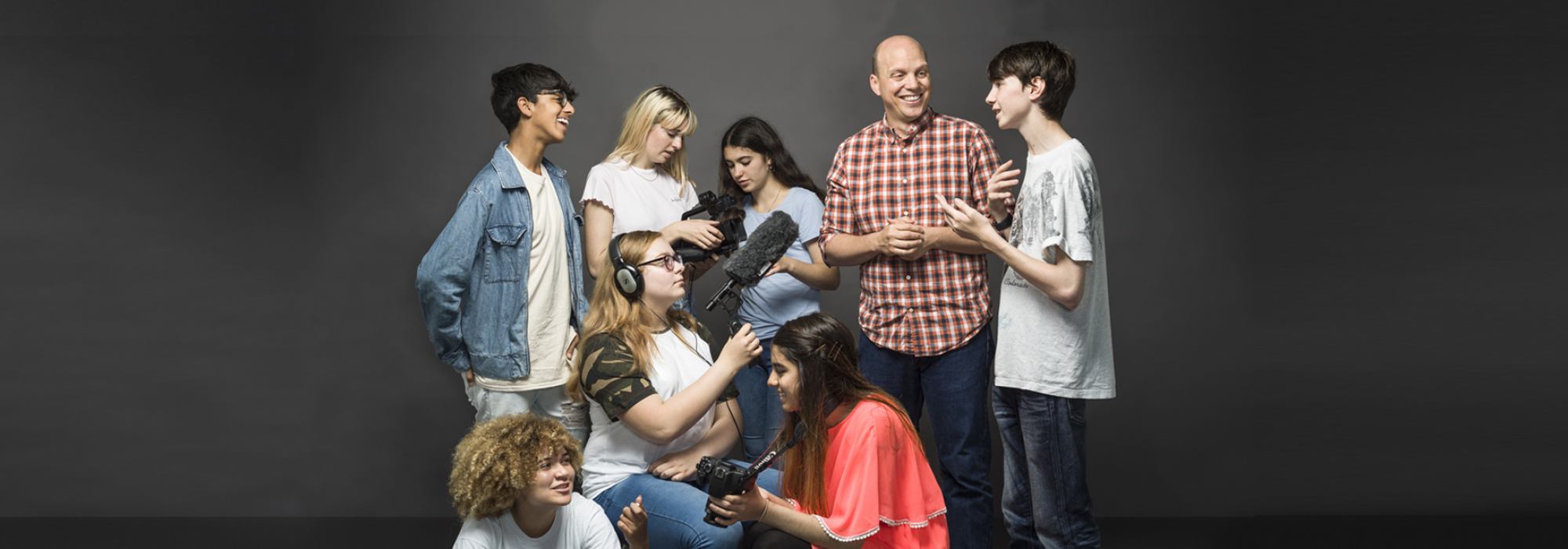
Dr Nate Goehring with KaleiKo film makers
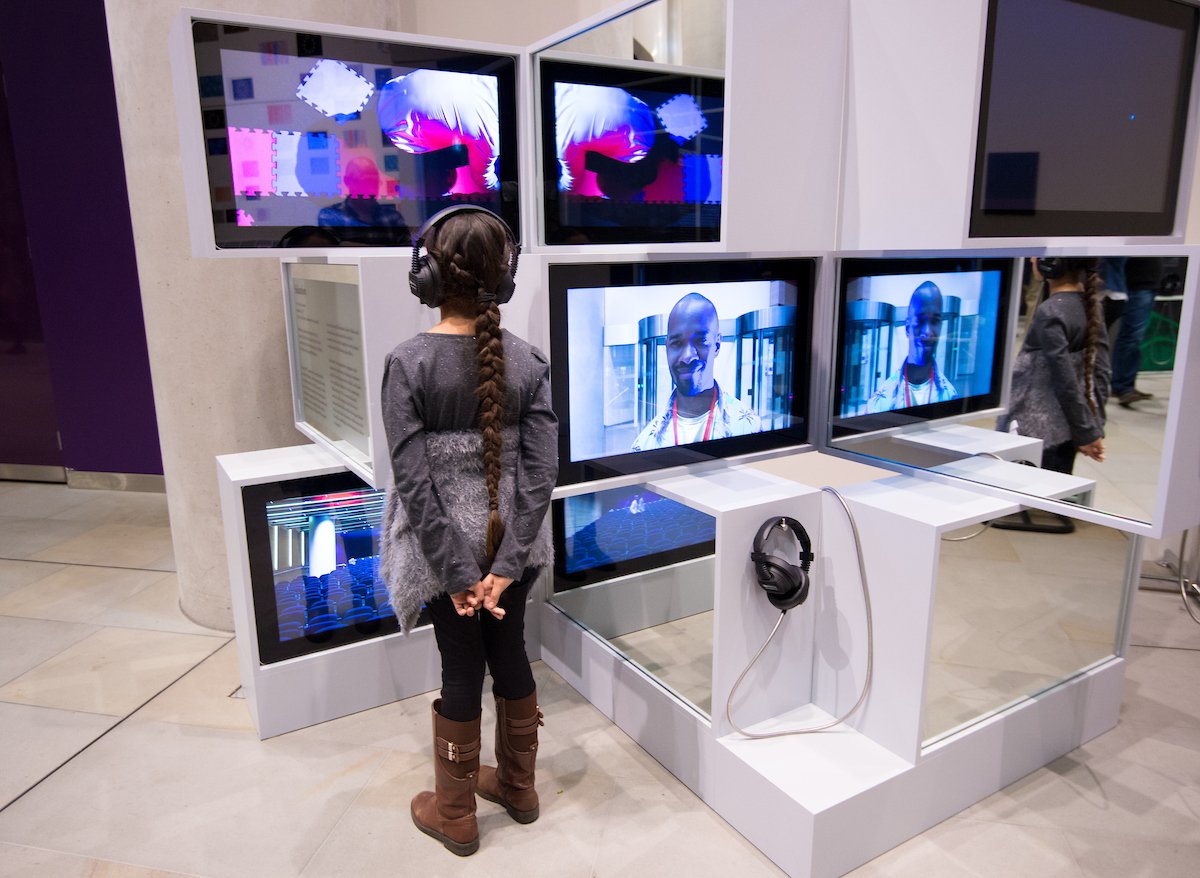
Image credit Fiona Hanson
The third commission in the exhibition was developed through a creative partnership between a group of young local filmmakers and the Crick’s Polarity and Patterning Networks laboratory. The result is a film called ‘Selection’.
Selection is an imaginative response to the concepts of uniformity, breaking of symmetry and cell fate – the process by which a cell takes on a particular identity or function. It is a surreal fictional narrative, following the daily life of an unremarkable office worker. As he goes about his day, the main character is oblivious to the fact that something transformational is about to happen.
Raza Tariq, one of the participants, explains how they developed the script:
“The lab’s research is basically how one cell gets to an organism… Because it starts off symmetrical, it needs to find its sense of direction, its head and its tail and its back and its bottom and everything. It needs to break that symmetry, so we interpreted that in a human form.”
Written, directed and produced by Lilo Amaral, Rachel Curley, Cleo Foster, Sarah Levy-Pipitone, Noor Shahzad, Grace Talbot, Raza Tariq and Joseph Winterson
KaleiKo., 2017, 1A Arts, Holborn Community Association
Watch the behind-the-scenes making of ‘Selection’
The collaboration was led by 1A Arts, a community arts project run by Holborn Community Association. The programme offers creative arts and digital media activities for children and young people that aim to raise their aspirations, boost confidence and develop creative skills. With support from professional filmmakers Lesley Pinder and Linda Mason, and inspired by Crick research, the young filmmakers worked together to write, direct and produce their very own short film based around the scientific concept of ‘breaking symmetry’.
The Polarity and Patterning Networks lab is interested in understanding how cells acquire their sense of direction, which is known as polarity. In becoming polarised, a cell distinguishes one side of itself from the other. In the nematode worm they study, this directional information is used by cells to divide asymmetrically to create two non-identical cells as well as to determine where the head and tail of the animal will eventually form.
In June 2017, the young filmmakers spent a whole day with Group Leader Nate Goehring and members of his laboratory, engaging in lively discussions and activities as they explored asymmetry and cell division. Not only does the resulting film offer a metaphor for the process of symmetry breaking and cell fate choice, it also provides an intriguing insight into the importance of diversity from the perspective of young people.